Traditional meal planning begins with a question: what are we going to eat this week? You pick recipes, write a shopping list, and then try to follow the plan.
Reverse meal planning begins with real life. You record what you actually cooked, including the easy dinners, last-minute changes, family favorites, and recipes that never made it to the table.
It does not mean giving up on planning. It means using your own history to plan better.
What is reverse meal planning?
The term is commonly used in two related ways. It can mean checking your fridge, freezer, and pantry first, then building meals around what is already there. It can also mean writing down what you actually ate and using that record to shape future menus.
Both approaches replace an idealized menu with something more useful: the reality of your kitchen. Here, we focus on the second meaning because it creates a personal bank of ideas that becomes more valuable each week.
You can keep this record in a notebook, a calendar, your phone's notes, or an app. The best tool is the one that makes logging dinner quick enough to become natural.
A meal plan remembers what you intended to cook. A meal journal remembers what truly worked.
Why planning backwards can feel easier
Real weeks rarely follow the menu exactly. Work runs late, plans change, leftovers need using, or nobody has the energy for the recipe you chose on Sunday. That does not make the plan a failure. It simply means it was missing information about your real routine.
Looking back helps you notice:
- which dinners are genuinely manageable on busy evenings
- which recipes everyone is happy to eat again
- which simple meals quietly save the week
- which older ideas deserve another turn
- which planned recipes are repeatedly postponed.
Your next menu no longer starts with a blank page. It starts with meals already tested by your household.
A simple four-step routine
1. Record what you actually cooked
After dinner, save only what may help later: the dish, the date, a photo if it makes the meal recognizable, and the recipe when there is one. An improvised sandwich or a takeaway everyone loved can be worth remembering too.
2. Add one useful reaction
A favorite, a “make again” marker, or a short note is enough: less salt next time, great for a rushed evening, the children loved it, too much work for a weekday.
3. Review your history before planning
Look at the last few weeks, then go back a little further. Recent repetition becomes obvious, while forgotten successes return at exactly the right moment.
4. Complete the menu without chasing perfection
Add a new craving, something seasonal, or a dish that uses what is already at home. Reverse meal planning provides a reliable base without trapping you in the past.
Why Melipo fits reverse meal planning
Melipo is designed as a food memory rather than a rigid weekly schedule. The starting point is the meal that was truly cooked.
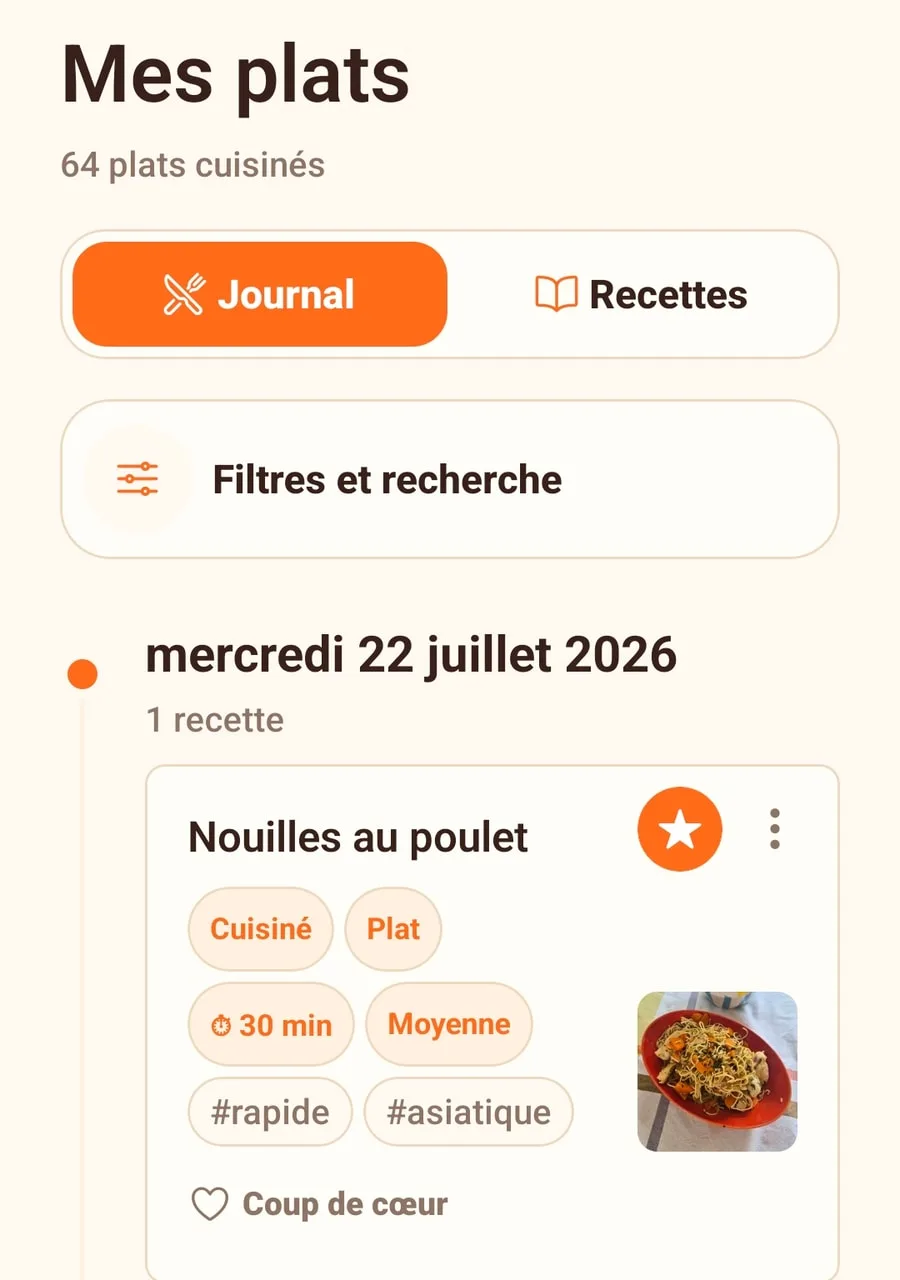
- The journal keeps every cooked dish with its date and context.
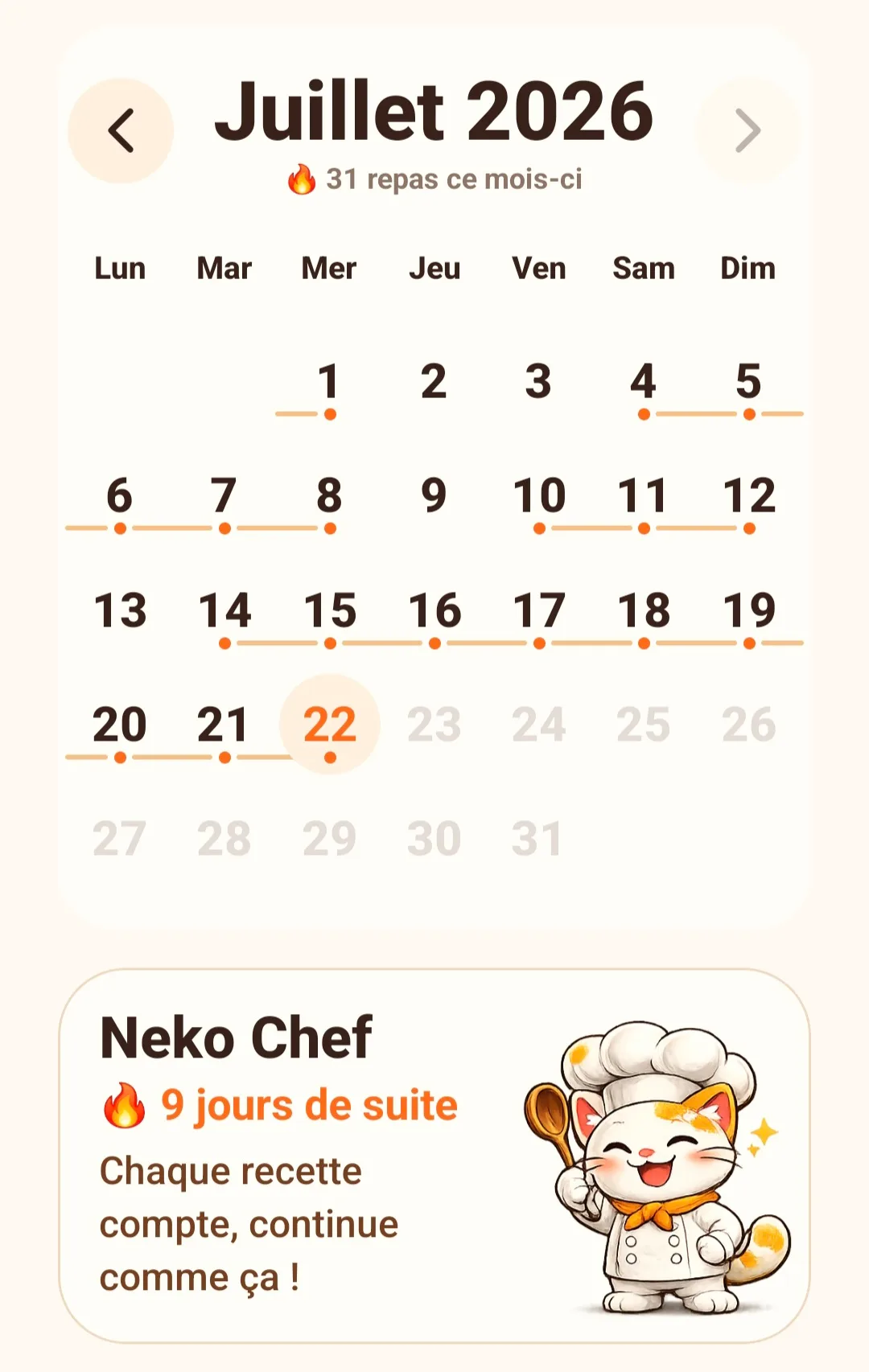
- The calendar makes weeks and months easy to revisit.
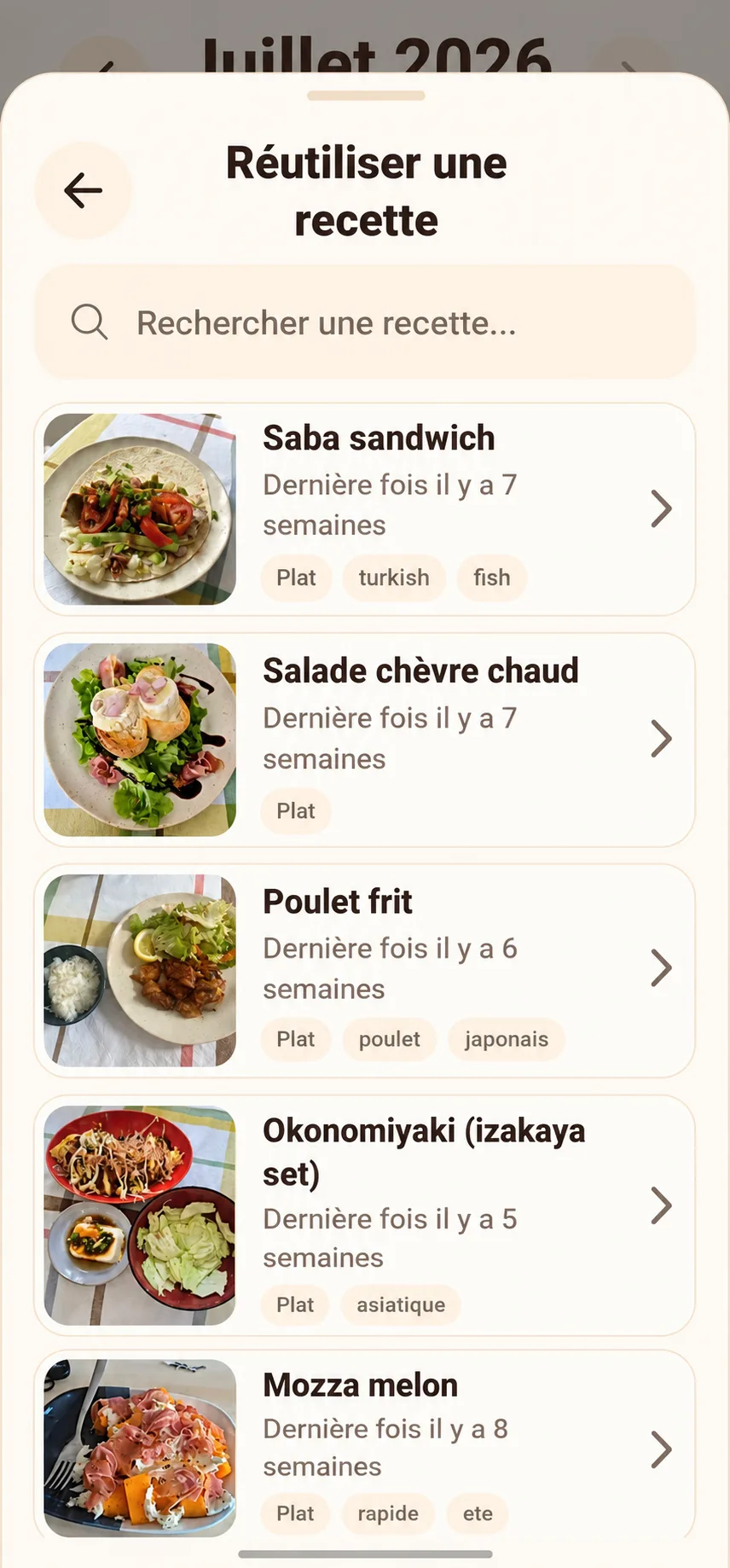
- Linked recipes keep the ingredients, method, and personal adjustments for next time.
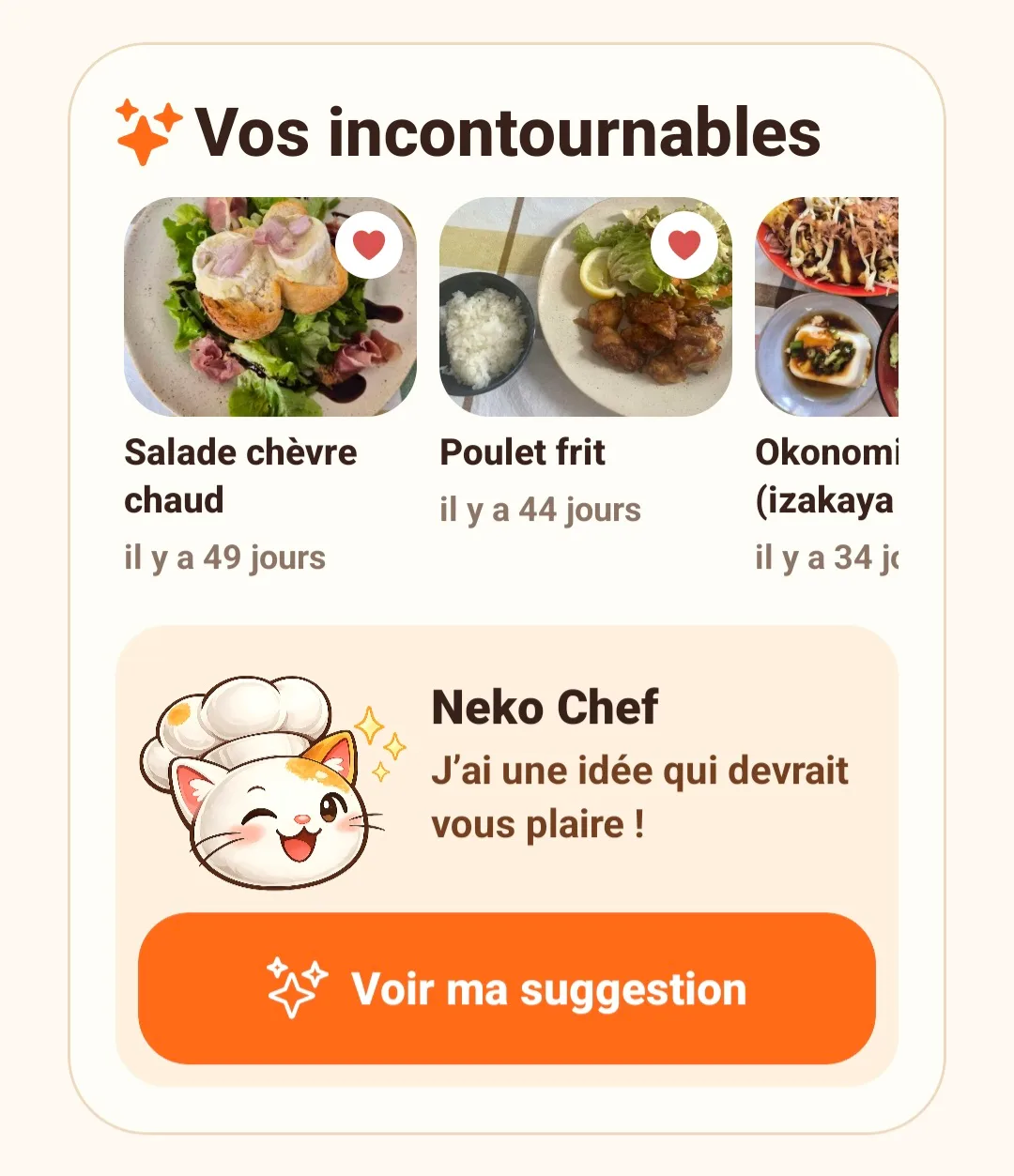
- Favorites, loved dishes, and make-again markers bring proven ideas to the surface.
- Tags let you organize food in a way that suits your home: quick, summer, children, guests, or pantry dinner.
- Neko Chef and monthly staples help rediscover a dish when inspiration runs low.
- The family notebook lets everyone contribute instead of leaving one person to remember every meal.
Once you choose a recipe, its ingredients can be sent to the shopping list. Your history becomes something you can act on, not an archive you rarely open.
What this looks like in a real week
Imagine your journal shows spaghetti bolognese on Monday, courgette soup on Tuesday, an improvised curry on Thursday, and quiche on Sunday. Two planned recipes never happened.
Next week, the soup can become a quick option, the curry earns a favorite, and the quiche returns on an evening when everyone gets home at a different time. A recipe that keeps being postponed can move to the weekend or leave the plan entirely.
This short look backwards often tells you more than another hour spent searching for new recipes. It reflects your available time, energy, and family tastes.
What Melipo does not try to replace
Melipo does not automatically inventory your fridge or track every ingredient in the pantry. If your version of reverse meal planning is entirely about using food before it expires, a dedicated inventory can still be useful alongside it.
Melipo is strongest at the personal side of the method: remembering what you truly cook, what people enjoy, what comes back often, and what deserves to be rediscovered.
Do you have to abandon traditional meal planning?
Not at all. The two methods work well together. A forward plan organizes groceries and busy days. The meal journal then records what happened, including anything moved, replaced, or improvised.
Plan a few useful anchors, record the reality, and let that history make the next plan more realistic.
Reverse meal planning FAQ
How is reverse meal planning different from meal planning?
Meal planning records dinners before you cook them. Reverse meal planning looks at what was actually cooked and uses that history to make future choices easier.
Should I record every meal?
Ideally, yes. Adding a meal in Melipo only takes a moment. You can keep an honest record of everyday food, then use loved dishes and favorites to highlight what you genuinely want to cook again.
Can reverse meal planning add variety?
Yes. Your history reveals both the meals you repeat often and the good ideas you have forgotten, so variety does not always have to mean finding something completely new.
Can a family use this method together?
Yes. A shared history lets everyone revisit cooked meals, mark preferences, and bring back an older idea. Remembering dinner no longer falls to one person.
Also read: why keep a meal journal?
Reverse meal planning becomes more useful as your history grows. Our guide explains how to start a simple meal journal that lasts.
Plan from the meals that feel like you
With Melipo, every cooked dish builds a practical memory of your tastes, routines, and the recipes that truly work at home.
When you need an idea, you no longer have to start from scratch. Your best meals are already there.