We talk a lot about cookbooks, shopping lists, and weekly menus. We talk much less about meal journals. Yet in everyday cooking, that is often the missing piece.
A recipe explains how to make a dish. A meal journal remembers when you cooked it, who it was for, how often it came back, whether people loved it, and why you might want to make it again.
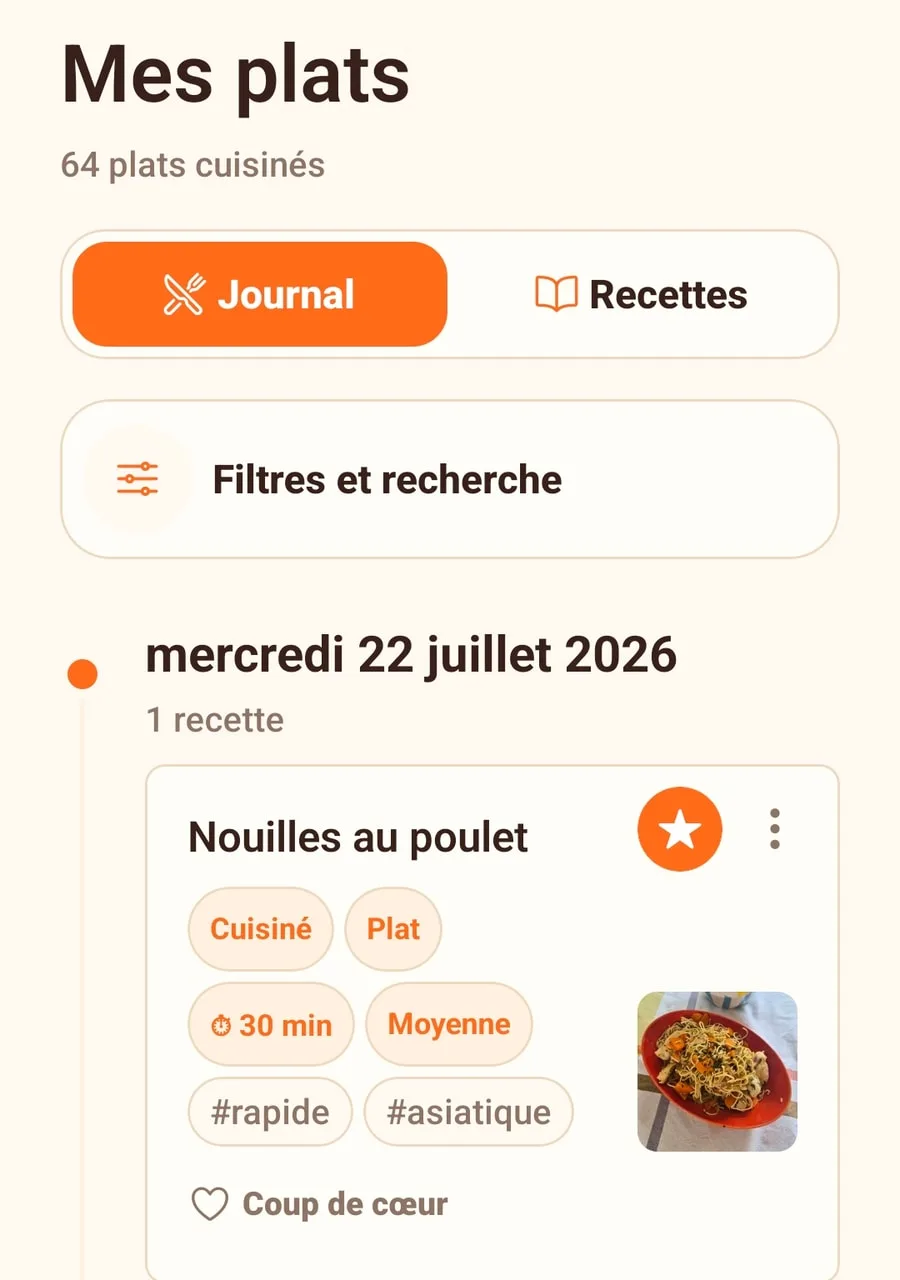
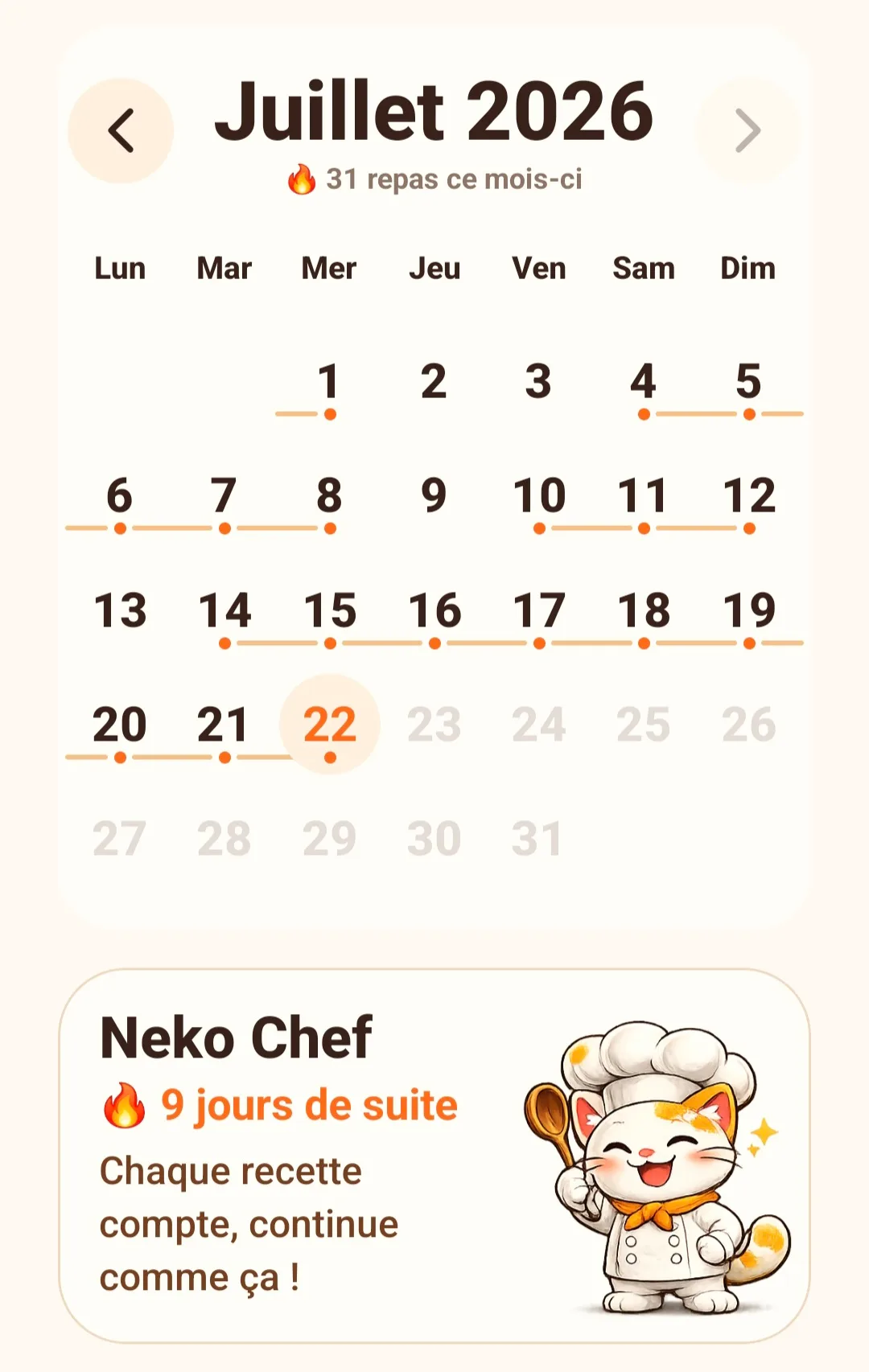
You can start simply, on paper or in a note. But when you want to find a dish again, filter by season, add tags, or share with family, an app quickly becomes easier.
That is what makes it useful. A meal journal keeps track of real cooking: rushed evenings, guests, holidays, birthdays, and the meals we forget even though they worked perfectly.
If you have ever found an old holiday photo and thought, “oh yes, we ate that all the time that summer,” you already understand the idea. A meal journal does the same thing, but on purpose.
Why it really helps day to day
Keeping a meal journal can seem unnecessary at first. You cook, you eat, then you move on. But that is exactly where good ideas get lost: ordinary evenings, improvised dishes, and meals that quietly worked very well.
The short answer is yes, it helps, as long as it does not become a complicated spreadsheet. A good meal journal should make cooking easier, not add admin work after dinner.
The useful questions are simple:
- what have we cooked recently?
- which dish did the children or guests enjoy?
- which recipe is worth making again?
- what do we cook too often without noticing?
- what idea can we bring back when inspiration is low?
A meal journal helps answer these questions in seconds.
What exactly is a meal journal?
A meal journal is a history of the meals you have cooked or shared. It can be very simple: a date, the dish name, a short note, and the recipe if there is one.
It is not necessarily a food diary focused on nutrition, calories, or dieting. It can be if you need that, but for family cooking, its main value is different: keeping a practical memory of what you have cooked.
How it differs from a recipe book
A recipe book answers: how do I make this dish? A meal journal answers another question: what place did this dish have in your life?
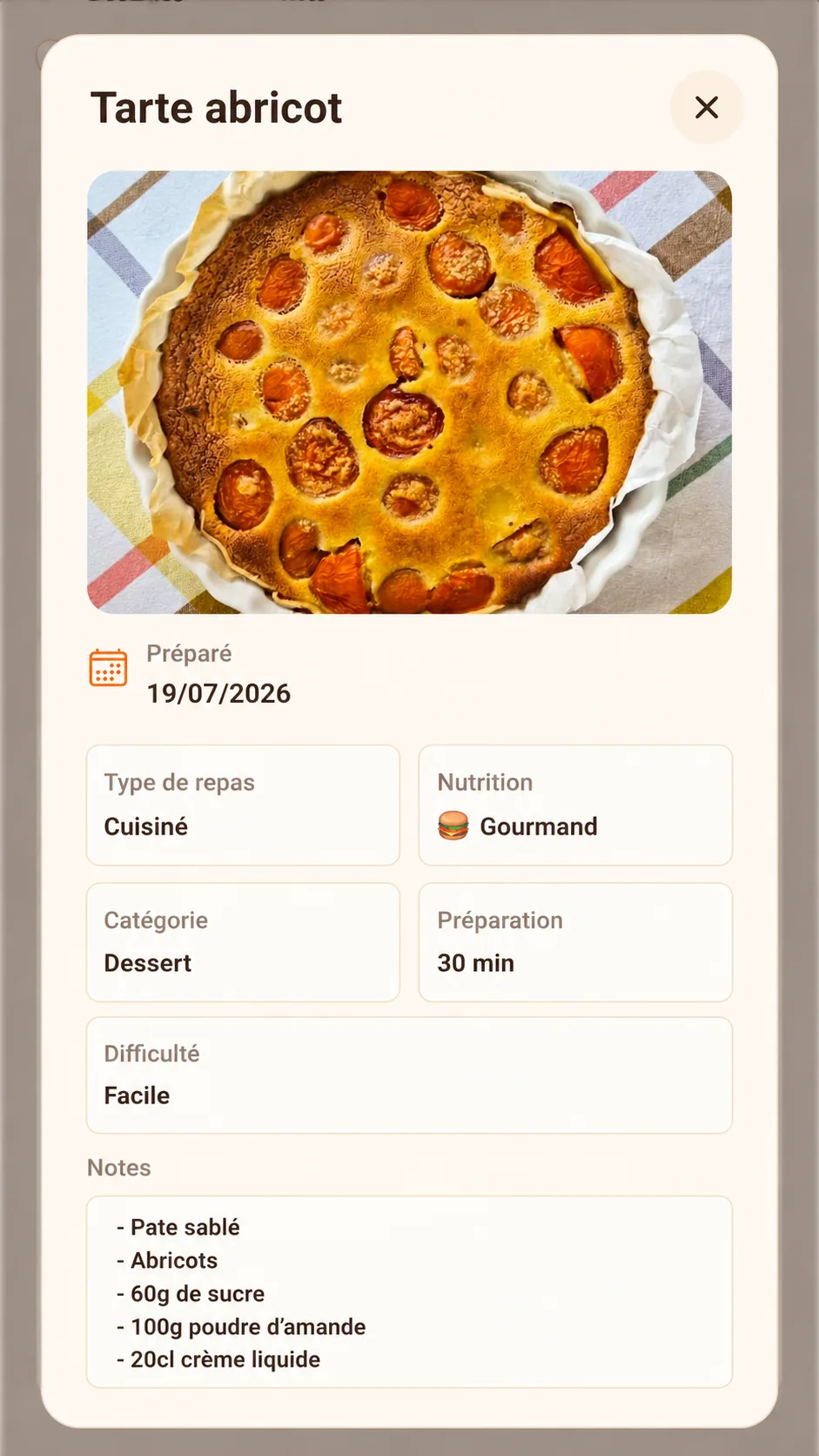
Take an apricot tart. The recipe gives you the ingredients, baking time, and steps. The meal journal can remind you that you made it on July 19, that it was perfect for a summer lunch, that you used less sugar, and that everyone loved it.
The recipe keeps the method. The journal keeps the context.
Why our cooking memory tricks us
We think we remember what we cook. In reality, we mostly remember the big landmarks: Sunday curry, the warm goat cheese salad that always works, the gratin everyone likes. The useful details fade faster.
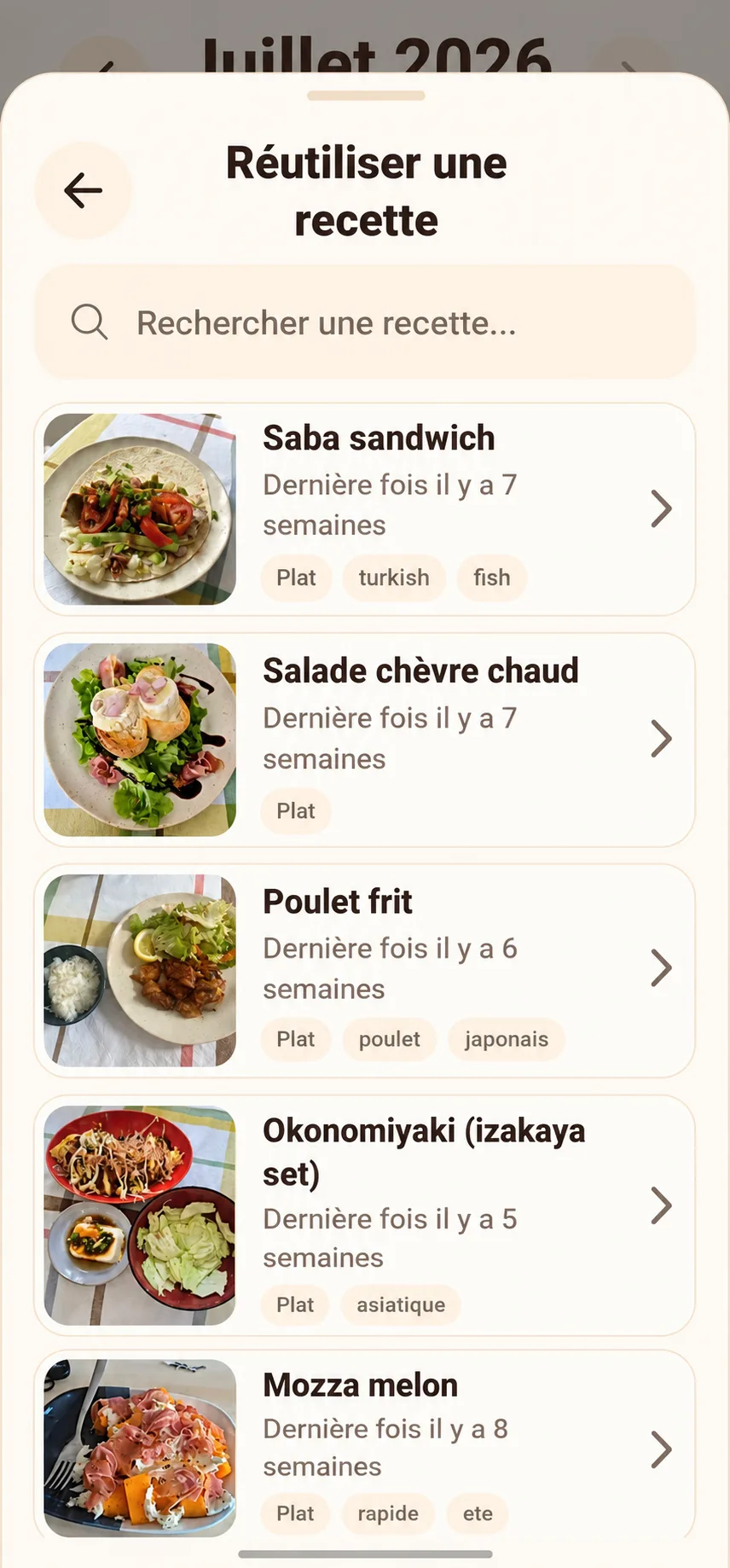
We forget that the fried chicken was six weeks ago, not last month. We forget that the bobun was made on a very hot day. We remember that guests loved dessert, but not the starter. We also forget the quiet meals that made a weekday evening much easier.
Our memory holds on to strong emotions. It is less reliable with repeated cooking, the simple meals that fill our weeks.
The problem with good ideas that disappear
A good meal idea is not always spectacular. Sometimes it is spaghetti bolognese, a carbonara sauce made without thinking, a very simple zucchini soup, leftovers turned into something clever, or a tomato, tuna, and avocado sandwich that surprised everyone.
Without a history, these ideas drift away. With a meal journal, they become easy to bring back.
Find meals you have already cooked
The first benefit is very direct: you can find what you have already made. It sounds obvious, but it is extremely useful in daily life.
When planning the week, we often start from nothing. We look in the fridge, open the internet, hesitate, and fall back on the same ideas. A meal history changes that habit. Instead of searching in a vacuum, you look at what has already worked.
You can review recent dishes, spot recipes you have not made in a while, and bring back a forgotten idea without spending an hour comparing recipes.
It is especially useful before shopping. You can see that you have made a lot of pasta lately, that soups keep coming back, or that the week could use an oven dish. The journal does not decide for you, but it gives you a real starting point.

Stop cooking the same dishes on repeat
We all have comfort dishes. The ones that ask for little energy, little thought, and almost no negotiation. The problem is that they can quickly take over.
A meal journal makes repetition visible. Not to judge yourself. To understand. If you see the same dish three times in two weeks, you can keep it because it makes life easier, or bring back an older idea for variety.
It also helps with the false feeling of variety. Sauces may change while meals still revolve around the same bases. A history makes that visible without effort.
It is not there to make you feel guilty
A good meal journal is not there to say “I cook badly” or “I never vary enough.” It helps you know your habits. Some weeks are busy. Sometimes the goal is simply to eat well without making the evening harder. The journal helps you spot the simple dishes that save those moments.
Plan weekly meals more easily
Planning menus is easier when you do not start from a blank page. A meal journal gives you raw material: recent dishes, past successes, forgotten recipes, quick meals, and ideas that work for guests.
Before writing your menu, you can look at:
- meals people enjoyed last week
- dishes you have not cooked in a while
- quick recipes for busy evenings
- more generous meals for the weekend
- ideas that use ingredients already at home
This saves time because it reduces the number of decisions. You are no longer looking for “the perfect idea.” You are choosing from ideas already tested in real life.
Know what people actually enjoy
Sometimes we confuse dishes we like cooking with dishes everyone likes eating. A meal journal brings a little objectivity.
If a dish comes back often, is marked as a favorite, is requested again, or disappears quickly at the table, that is useful information. On the other hand, a recipe that looked beautiful on paper may never have returned because it took too long or did not really please anyone.
The journal helps separate attractive recipes from useful ones. And in daily cooking, useful recipes are gold.
For guests, it matters even more
Hosting someone means remembering small details. Who does not like cheese? Which dessert worked last time? Was that curry too spicy for the children? Had you already served that tart to these friends?
A meal history means you do not have to keep everything in your head. You can find a birthday meal, a dinner with friends, or what you cooked during a holiday.
Keep a personal food memory
A meal journal also has a more personal value. It tells a period of life through what you cooked: simple meals during back-to-school weeks, summer salads, early autumn soups, comforting dishes in a tired winter.
It does not have to be nostalgic. It is concrete. Looking back through a history, you find habits, seasons, guests, experiments. You see which recipes became classics and which belonged to one specific moment.
A meal journal can bring back a birthday cake, meals cooked on holiday, or the period when the children always asked for the same dish. These traces do not replace memories. They make them easier to find again.
How to start simply, with or without an app
The best meal journal is the one you actually keep. There is no need to build a perfect system. Start small: a notebook page can be enough at first, then an app becomes useful when you want to search, organize, and find meals more easily.
Write only what matters
For each meal, you can note the date, dish name, recipe if there is one, a photo if you have it, and a short note. For example: “make again,” “less sugar,” “good for guests,” “children liked it,” “good but too long for a weeknight.”
These small notes are often worth more than a long comment. They speak to the person who will cook later: you.
Add useful markers
In an app like Melipo, tags make the journal easier to browse. You can organize dishes in your own words: quick, vegetarian, summer, guests, oven, kid-friendly, make again, favorite. The goal is not perfect filing. It is finding an idea quickly with words that make sense to your family.
Keep the link with the recipe
When a meal comes from a specific recipe, connect the two. That way, you keep both the method and the memory of the moment when the dish was cooked. That is when the journal becomes truly practical.
Common mistakes
The first mistake is trying to note everything: calories, exact quantities, mood, price, nutrition details, time spent, everyone's opinion. If you enjoy that level of tracking, great. But for most families, it is too heavy.
The second mistake is only noting exceptional meals. The journal becomes nice to look at, but less useful. Ordinary meals are the ones that help most when planning the next week.
The third mistake is forgetting dishes without a recipe. A meal bought from a deli, a quiche everyone loved, a ramen discovered in a small restaurant, a dish improvised from leftovers: all of these can deserve a place in your history.
Finally, avoid turning your journal into a constant control tool. It should serve your cooking, not the other way around.
Good habits for a useful journal over time
- note meals soon after cooking, while the memory is fresh
- keep notes short and genuinely useful
- add a photo when it helps recognize the dish
- mark recipes you want to make again
- notice dishes people often enjoy
- check your history before shopping
- accept imperfect weeks, because they are part of real cooking.
With these simple habits, the journal becomes more valuable over time. The more you cook, the more it helps.
Meal journal FAQ
What is the difference between a meal journal and a food diary?
A food diary is usually used to track what you eat for health, nutrition, or weight goals. It may include calories, portions, or foods consumed.
A meal journal has a different purpose. It keeps the history of cooked dishes, helps you find a recipe you already made, remember what your family enjoyed, and get ideas when inspiration is low.
What should you write in a meal journal?
The basics are enough: date, dish name, related recipe, a photo if possible, and a short note. You can also add tags like quick, summer, guests, vegetarian, or make again.
Is it useful if I often cook the same meals?
Yes. A meal journal helps you see your habits clearly. You can notice which dishes come back often, find favorite recipes quickly, and rediscover meals you had forgotten.
It is also a simple way to bring more variety into everyday meals.
Is a meal journal useful if I do not cook much?
Yes. Even if you only cook a few times a week, keeping a meal history helps you find recipes you enjoy and save time when you need a dinner idea. The value comes from regularity, not from the number of dishes saved.
How long does it take to keep a meal journal?
A few seconds are enough. A good meal journal should be quick to fill in. If adding a meal takes less than a minute, it becomes much easier to keep a regular history of what you cook.
Can you keep a meal journal as a family?
Yes. That is one of its best uses. Everyone in the family can find recipes already cooked, mark favorite dishes, and share new ideas easily.
Over time, the journal becomes a shared memory of the meals that shaped everyday life.
Which app should I use for a meal journal?
A good meal journal app should let you add meals to a calendar, link recipes, browse your history, see dishes you cook often, and keep favorites. The important thing is that adding a meal stays fast.
Also read: saving family recipes
A meal journal remembers when and why a dish mattered. A recipe book keeps the method so you can make it again. The two work beautifully together.
If you want to go further with recipes, read our guide on how to save family recipes.
Create your food memory
Every meal tells a story: an improvised dinner, a recipe everyone loved, or a dish you want to cook again and again.
With Melipo, keep track of these moments, find your favorite recipes easily, and let your meal journal grow week after week.